Interview
The crash from the kitchen: meeting Gävle Kvänum Ghost Crew
10 October 2026 · 13 min read
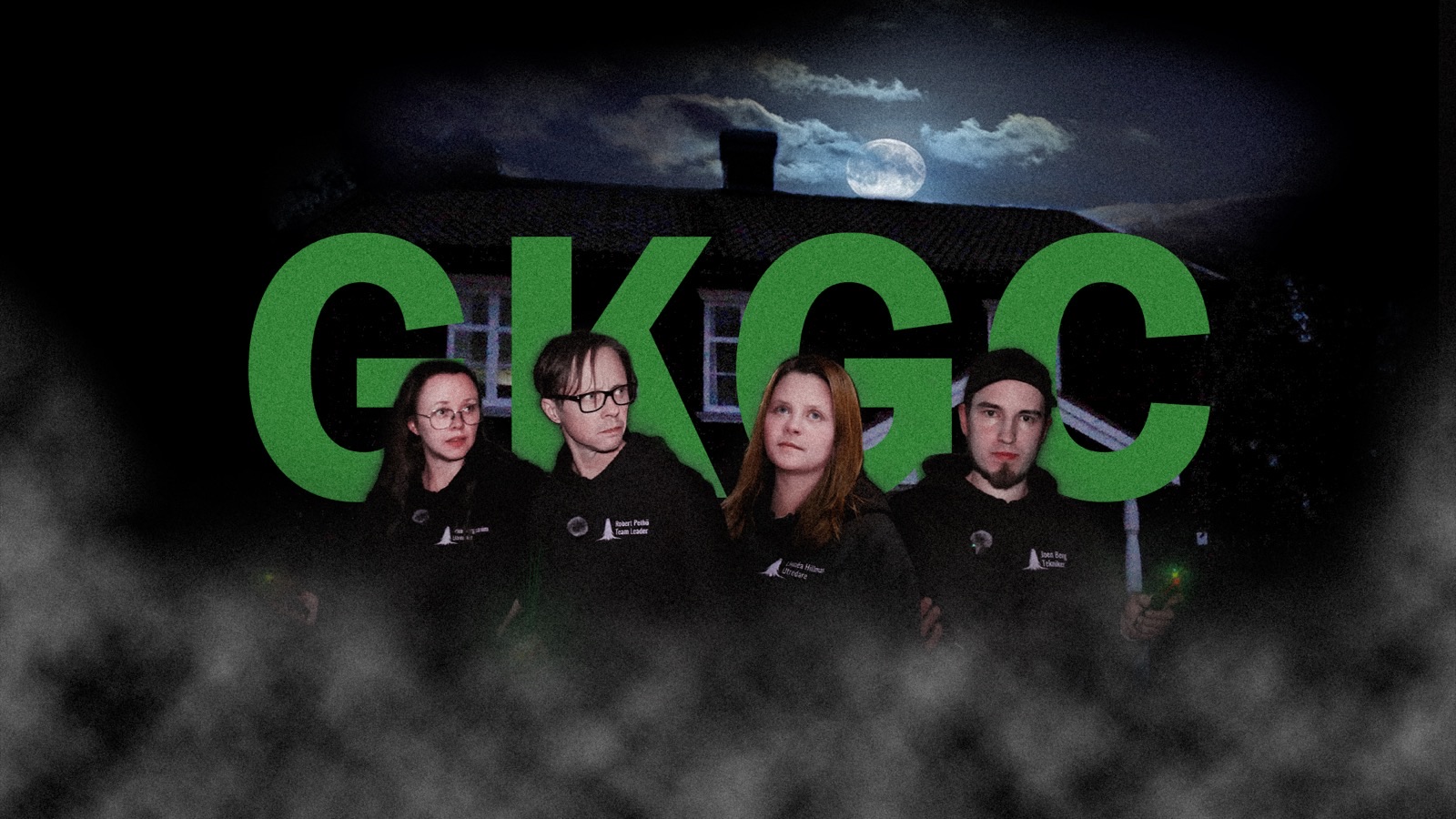
They build their own sensors, read up on a building’s history before they set off, and would rather test their own equipment than anyone else’s theories. Gävle Kvänum Ghost Crew formed in 2024 with a single niche: look for the natural explanation first. Joen, Robert, Linnéa and Ylva on the crash from the kitchen at Frammegården, the night in Skara that made the sceptic waver — and why ”unexplained” must never come to mean ”paranormal”.
Most ghost hunters go out to find something. Gävle Kvänum Ghost Crew go out to find out what actually happened — and they are entirely open about the fact that the answer is usually a floorboard, a draught, or their own equipment.
The Swedish team formed in 2024 and has four members with clearly separate roles. Joen Berg handles the technology and builds some of the gear from scratch. Robert is the team leader and works in education by day. Linnéa Hillman and Ylva are investigators, the latter with a job in healthcare. None of them does this full time.
”We are not trying to prove that ghosts exist, but we are not trying to prove that they don’t either. We are trying to find out what actually happened.”
That is an unusual position in a genre where certainty tends to pay. GKGC have built their entire niche on the opposite: looking for the natural explanation first, and saying so plainly when they can’t find one.
We spoke to all four about the crash from the kitchen at Frammegården, about the night in Skara that made the group’s most outspoken sceptic waver, and about why the word ”unexplained” must never be allowed to slide into ”paranormal”.
Four ways into the same question
They arrived at the same group from four different directions.
Joen has always been drawn to things we don’t quite understand, but he has never believed in ghosts in the classic sense. For him the question is the interesting part, not the answer. When people experience things they can’t explain, he finds it fascinating to try to work out what actually happened.
Robert has carried the interest longest. He grew up on Swedish paranormal television and on older programmes following ghost hunters with camcorders, hunting for orbs.
”I actually tried to start similar projects back in the late nineties and early two-thousands, but it was only with GKGC that it really happened.”
Linnéa has always had an interest in the paranormal and has followed many different ghost groups over the years, but had never considered investigating herself. Ylva read ghost stories as a young child, watched the paranormal shows as a teenager, and remembers a fair amount of glass-moving séances in the basement of her childhood home.
Four different ways in, and four different ways of reacting to the same reading. That isn’t a weakness in the group. It is the whole point of it.
The figure, the sock and the man on the bus
Asked about their first unexplained experience, the four give answers that have nothing in common.
Linnéa woke one night to a figure in old-fashioned clothes sweeping straight across her in bed before disappearing into the wall. And then there is the sock ghost.
It is a sock that once came flying out of one of the bedrooms into the hallway while she was home alone. Since then the same sock has fallen from odd places, vanished and turned up again.
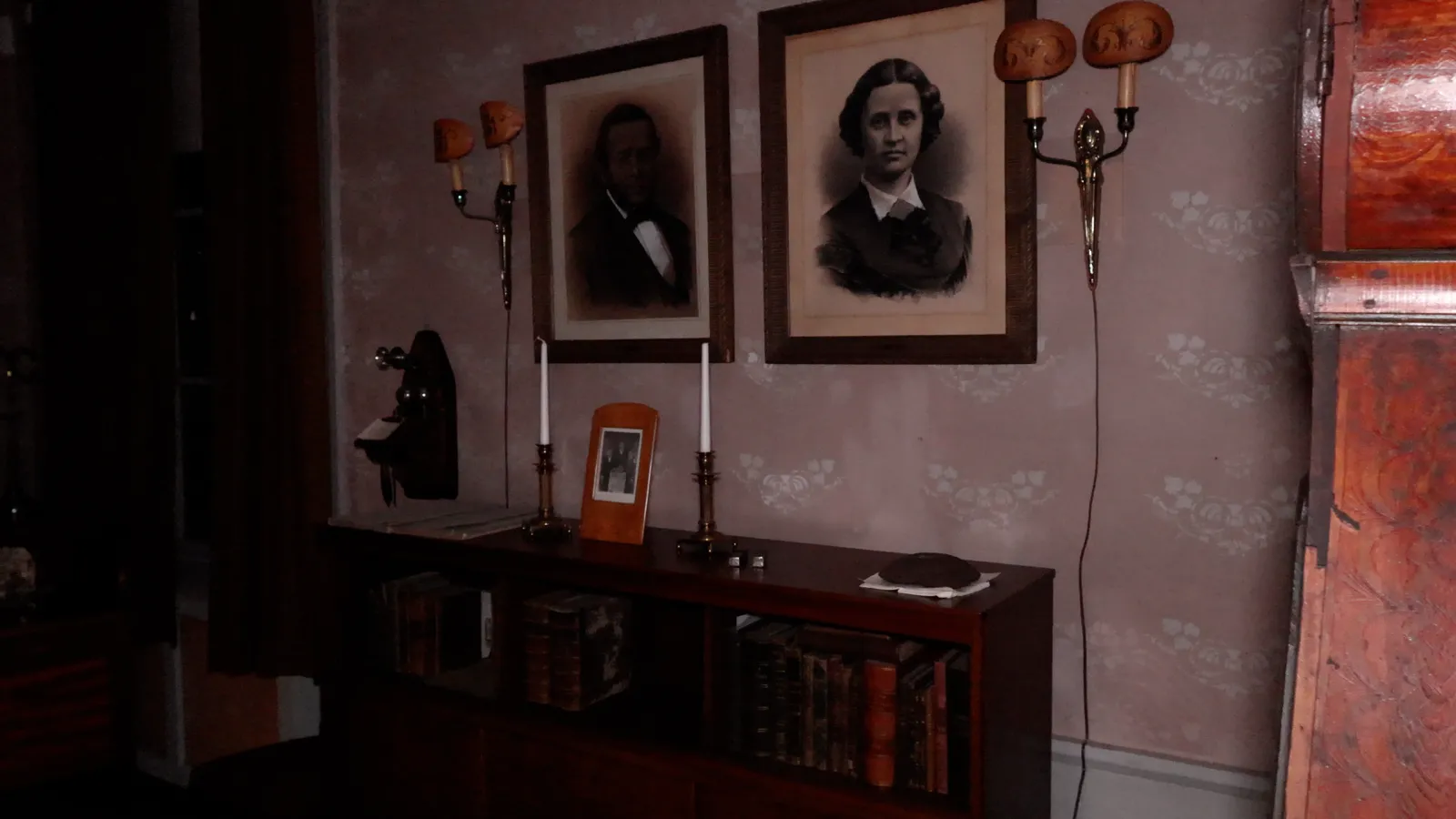
Robert remembers a bus journey many years ago. A person sat in front of him, head down and eyes closed, and suddenly he experienced it as though the person almost thawed away and vanished. Even at the time he assumed he was tired or seeing things. The memory stayed with him anyway.
Joen struggles to answer the question at all, because he doesn’t know whether he has ever experienced anything that genuinely lacks an explanation. Ylva hasn’t experienced much privately — usually, she says, you find some explanation.
So two of the four have seen something they can’t place. Two haven’t. They still ended up in the same group, and that is no accident.
Why they started GKGC
The reason is the most unanimous part of the whole interview. They had watched a lot of ghost hunting and felt there was room for a team working more critically and more technically.
They sometimes saw equipment used in ways where a reading was interpreted as paranormal rather quickly, even though there are plenty of natural reasons for an instrument to react.
”We don’t want to say that other groups are doing it wrong, or that our way is the only right one — on the contrary, we love that so many people are doing this.”
There are groups that work with feelings, with mediums, or with completely different methods. GKGC’s niche became working systematically, technically and critically, and looking for natural explanations before they even start considering other options.
So they don’t arrive at a site assuming there must be a ghost there to prove. They go to see whether anything happens, and to be able to describe it properly if it does.
Equipment they could draw from memory
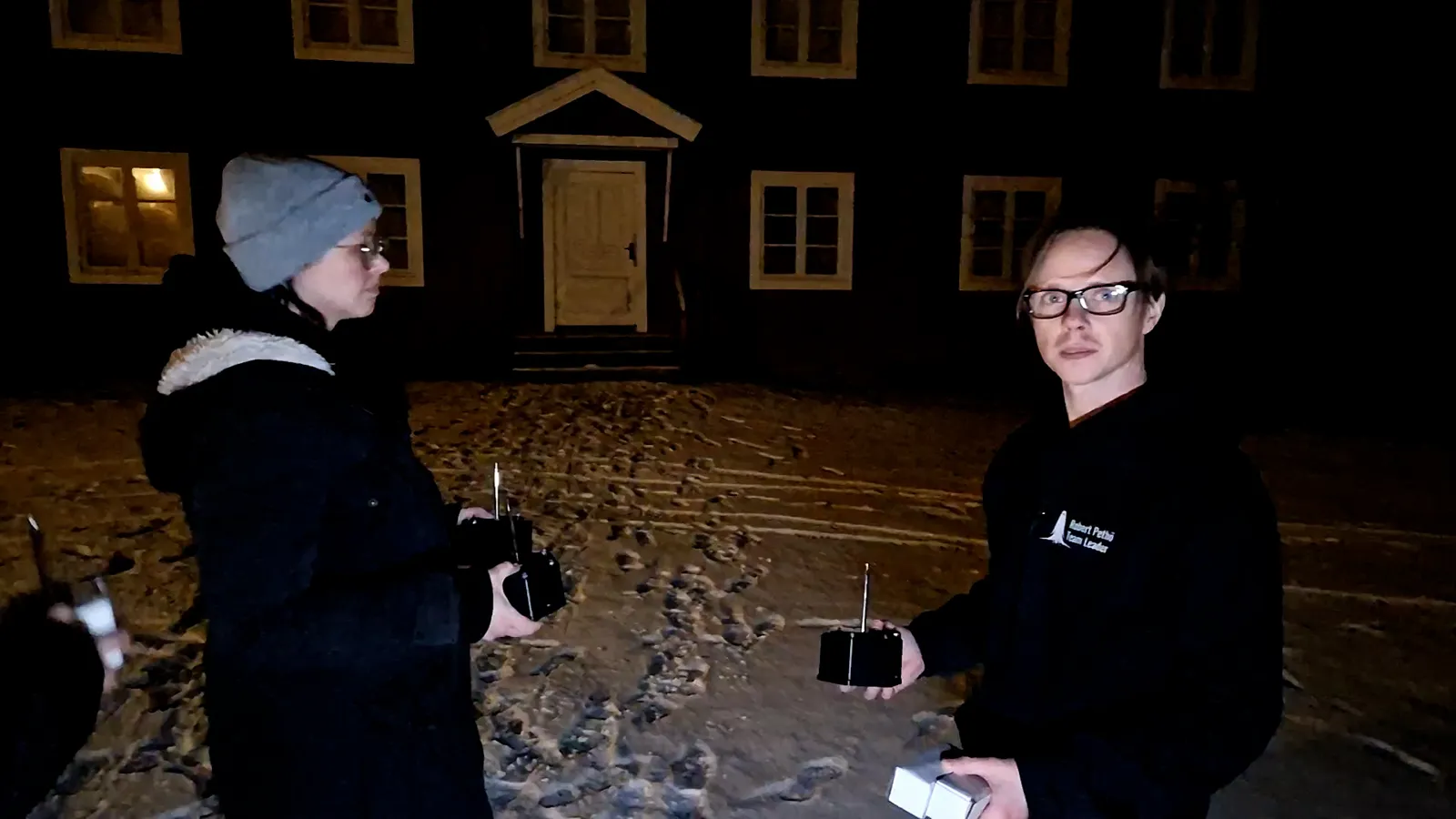
The flight cases hold surveillance cameras with IR illumination, ordinary cameras, audio recorders, EMF meters and various sensors for movement and environmental change. They have also experimented with the Kinect.
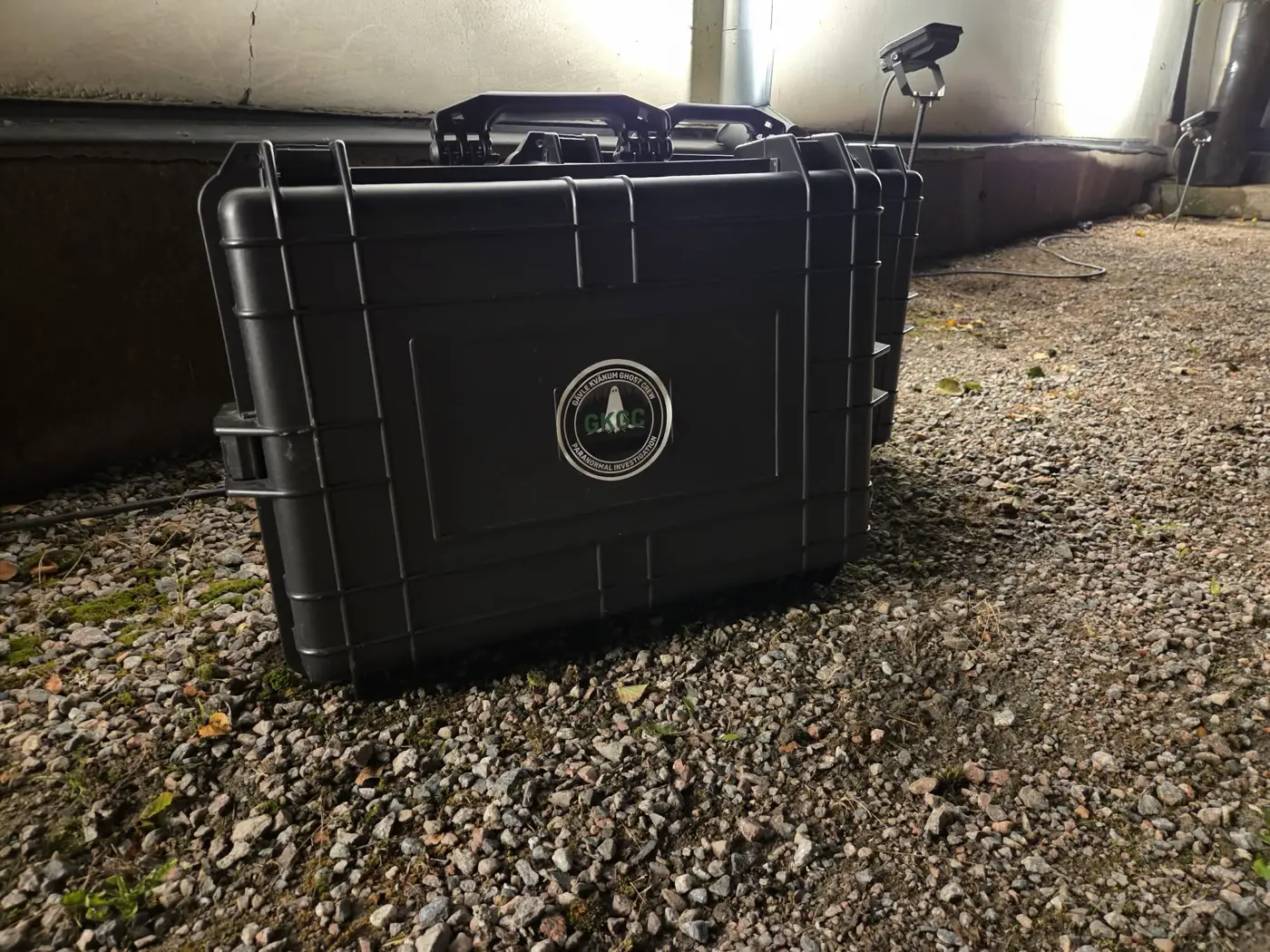
But the interesting part is what Joen builds himself.
Two versions of their own ultrasonic unit have been built. It detects movement by measuring distance, plays a sound when something moves within range, and can save readings to a memory card. The group has also built its own antenna-based proximity sensor, inspired by the REM pod concept.
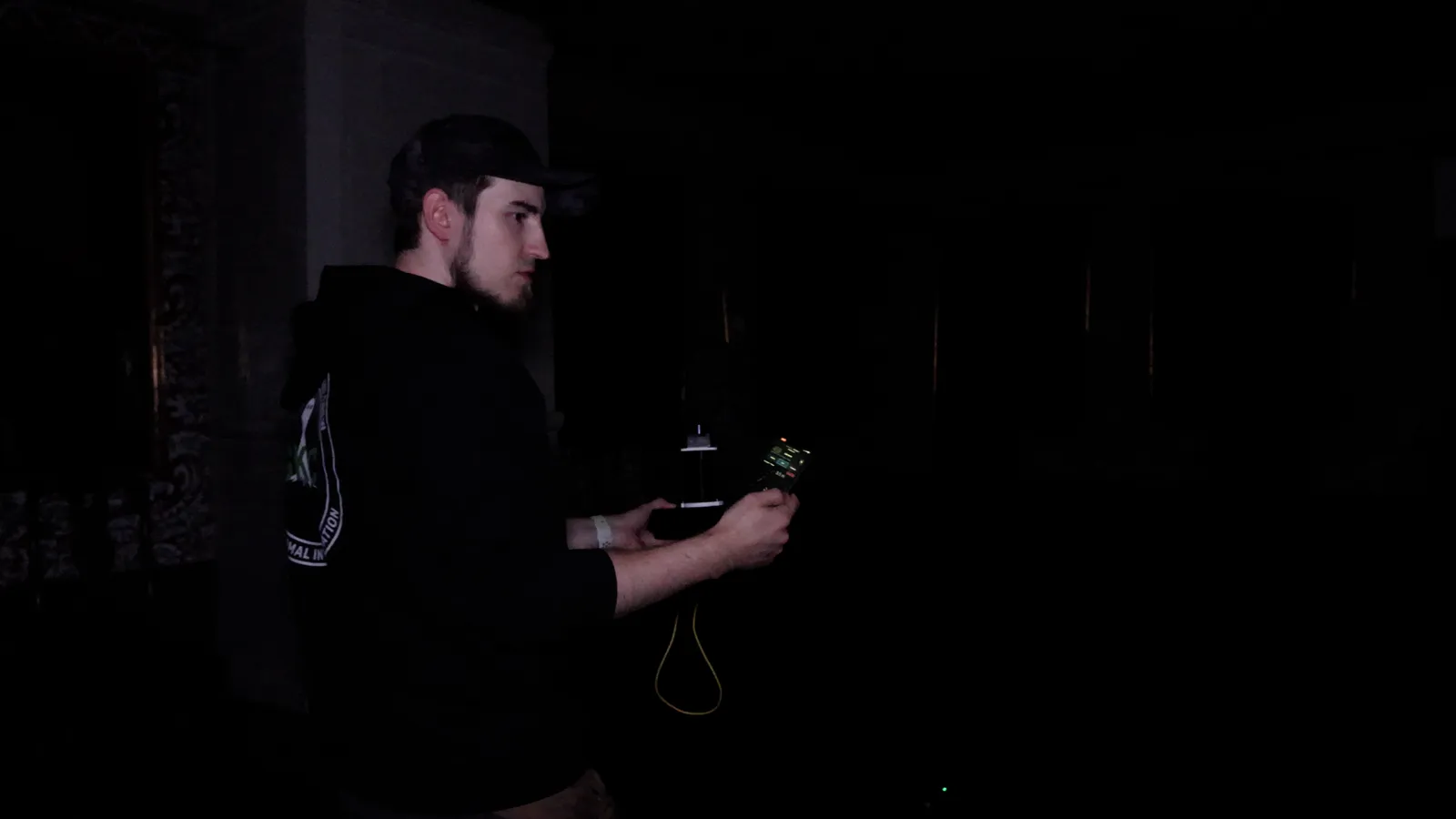
The point isn’t that home-built is better. The point is that they then know what it does.
”What is the sensor measuring? What can make it react? What are the margins of error? What do the electronics and the software do to the reading before we see the result?”
They are equally clear about the other half. Home-built kit isn’t automatically better than commercial kit — they can make design mistakes like anyone else. The difference is that they know the design and can test, change and document it themselves.
And no single device gets to settle anything. Several instruments are used together, precisely because one reading on its own doesn’t mean much.
”If an EMF meter suddenly reacts, our first question isn’t ’was that a ghost?’ but ’why did it react?’”
The genuinely interesting moments only arrive when several independent systems register different things at the same time. A sensor changing value in the same instant as a separate audio recorder catches a sound, with something visible on a camera as well. It still proves nothing. But then there is actually something to investigate.
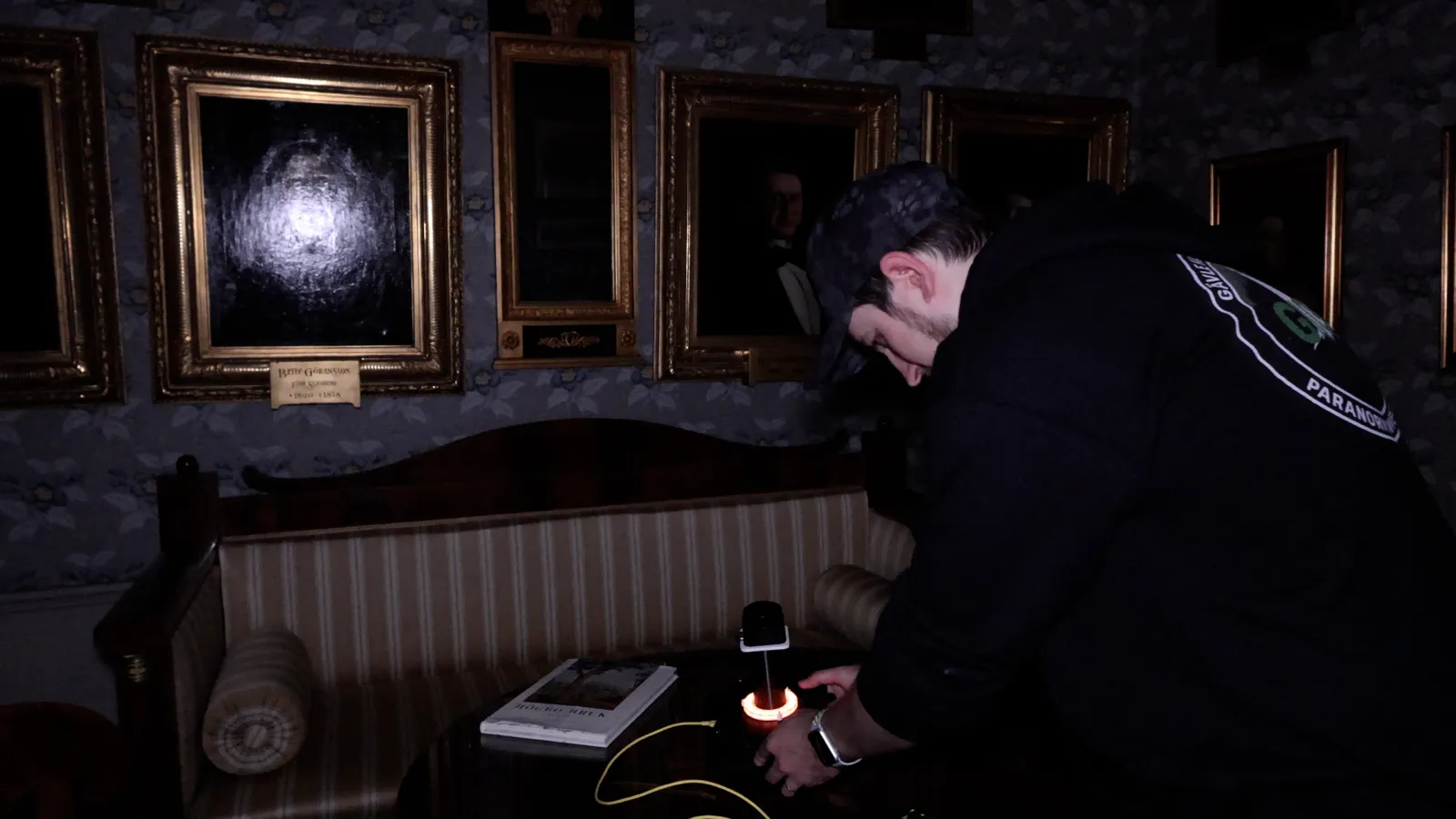
Ghost at full volume in the car
Preparation starts long before they set off. They read up on the site, its history and the experiences reported there. Where possible they talk to the people who live or work there, and to people who say they have experienced something themselves.
Then comes the practical part: cameras, batteries, sensors and audio gear to be checked, charged and packed. If they can visit the site beforehand, they already start planning where the surveillance cameras and the command post will stand.
And according to Robert and Ylva at least, the drive there includes Ghost at full volume.
On arrival they walk the site and start rigging. Surveillance goes live as early as possible, since something is just as likely to happen while they unpack as three hours later.
The command post — computers and equipment for monitoring the cameras — is ideally placed some distance from the investigation area. Partly so they can work undisturbed, partly because computers, routers and radio transmitters can themselves affect several of the instruments.
Then they run sessions. They have ideas about what they want to test but work fairly freely depending on what happens. If they get a reading, they try to examine it more closely, find possible sources of error and, where possible, recreate the result. Recently they have also been streaming their investigations live.
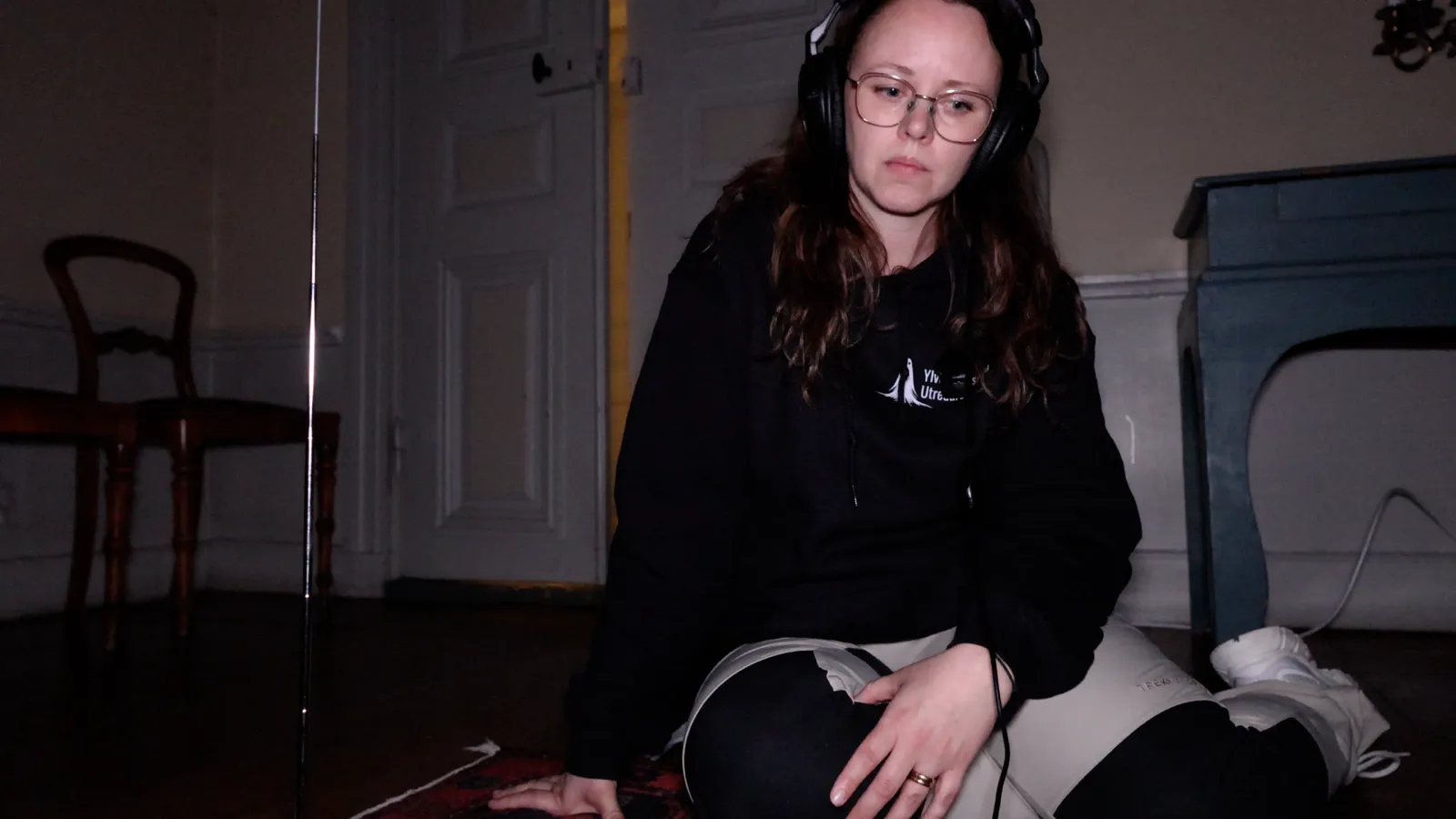
They keep going until two or three in the morning. Then everything is packed up and the material comes home with them — where many hours of reviewing video, audio and data usually wait.
The crash from the kitchen
One place recurs in three of the four answers: Frammegården in Värmland.
It was the group’s first visit. They were upstairs when a loud metallic crash came from the kitchen below. A metal object had fallen in among pots or other metal objects. None of them was down there.
In the moment it was extremely effective. Standing in a completely silent old house in the middle of the night and hearing a crash from the floor below does something to the body before the brain catches up.
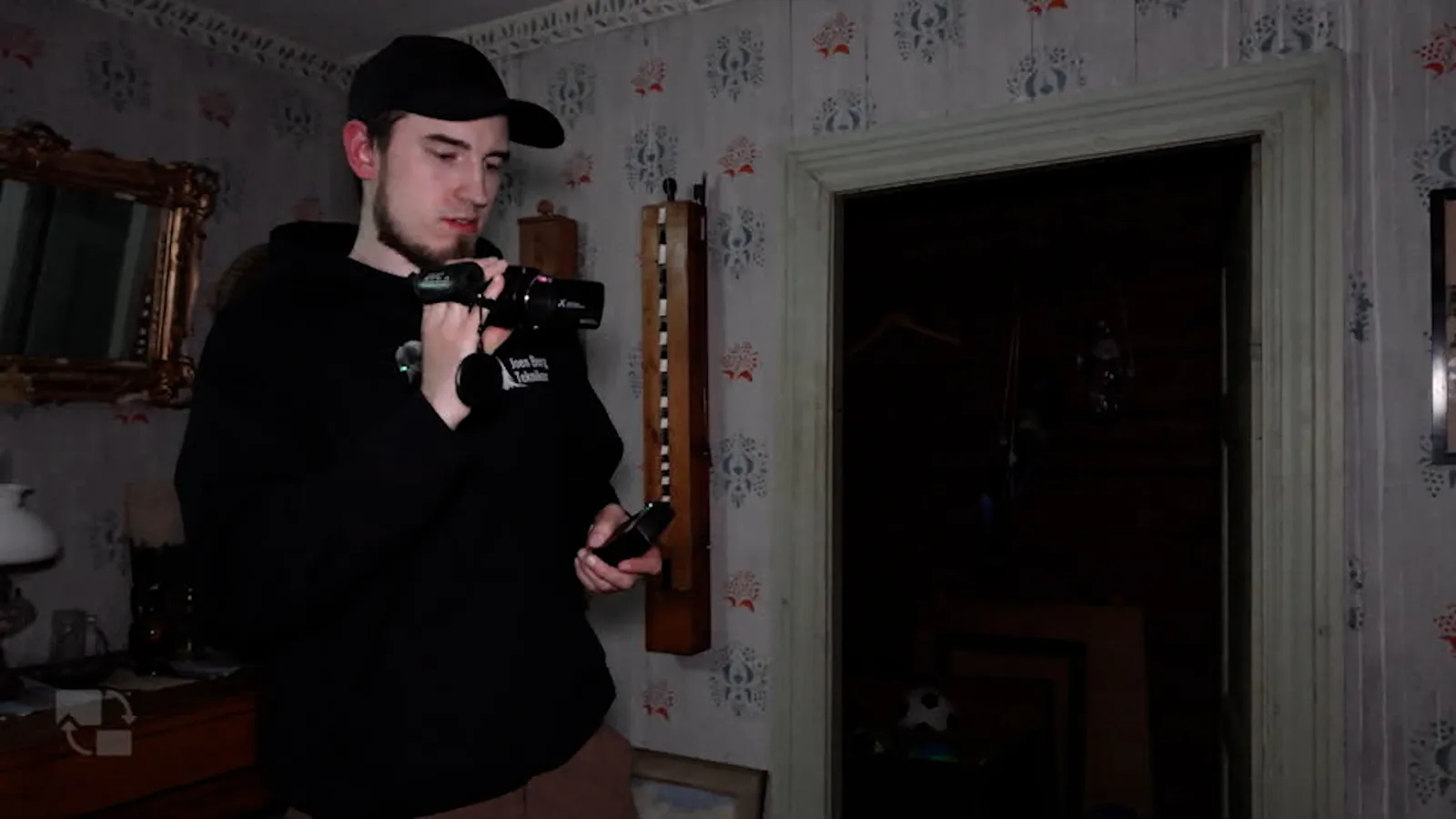
Afterwards the troubleshooting began. The object had been handled earlier that evening and may have been resting unstably, shifting slowly until it finally fell. Robert has also wondered whether an animal, a mouse or a rat, could have set it moving.
”I still don’t know exactly what happened, but the fact that I don’t know doesn’t automatically mean the explanation is paranormal.”
The house does its share of the work. Joen describes Frammegården as very dark and almost claustrophobic, even with the lights on. The kind of place where you almost feel you ought to be afraid — which is interesting in itself, because it shows how much the setting shapes the interpretation.
Linnéa felt affected and frightened from the moment they arrived until they drove home. She still doesn’t know whether that came from something in the house, or simply from already knowing what kind of house it was and why they were there.
They had planned to stay all night and sleep in the car outside. One member of the group was feeling steadily worse. Then, as they sat in the car, a loud, almost chilling scream came from outside. It did not come from the house and was in all likelihood an animal — but after the whole evening it was the last straw. They went back in, turned the lights on, packed up and drove home in the middle of the night.
”Whatever the cause, nobody should have to stay in a place where they don’t feel well.”
It is the only time the group has abandoned an investigation.
The night in Skara that shook the sceptic
If Frammegården is the group’s most dramatic night, the old library in Skara is its hardest to explain.
Robert and Ylva investigated there on their own, as the rest of the team couldn’t join. Over the course of the evening several different instruments reacted. Motion-sensing cat balls, music boxes and REM pods were triggered at different points.
But one sequence is the one that stays with them.
They were sitting together at the monitors when a lamp in the basement went out — at the same moment as the music box on the stairs activated and the basement camera switched to night mode. Then the music box went off again. Several people were sitting side by side watching the whole thing unfold.
”It still gives me chills.”
For Robert, who describes himself as a sceptic, Skara became the place that genuinely challenged that position.
”If there really are places where something paranormal happens, this is one of the places I would most like to keep investigating.”
The contrast is worth noting. Frammegården has a very strong reputation, and on the group’s most recent visit almost nothing happened. Skara has nothing like the same mythology — and gave them the most to think about.
A location’s reputation evidently says very little about what actually happens there.
Troubleshooting, not ghost hunting
The group describes their method as troubleshooting, in those words.
If something happens, they first try to recreate it. If an instrument reacts, they need to understand what that particular instrument measures and what can influence it. They check whether the same thing happens again, compare it against other instruments, cameras and audio recordings, and change one variable at a time.
They also test their sources of error on purpose. A simple example is the EMF meter. They have measured for themselves how a two-way radio produces strong readings, sometimes at considerable distance. Without knowing that, it is easy to stand in an old house, watch the meter react and assume the reading is mysterious when the cause is your own equipment.
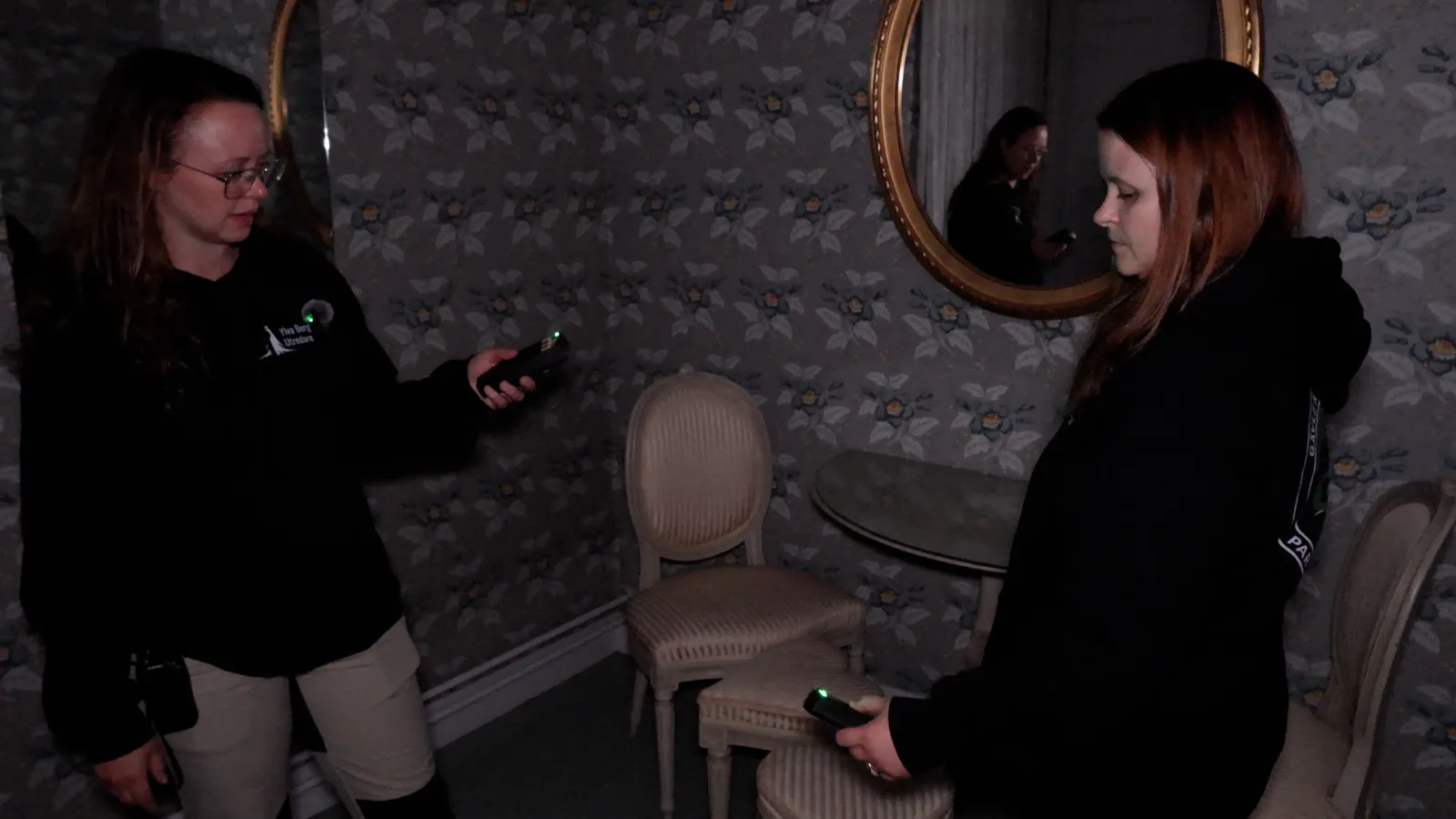
Another is the Kinect. It is built to identify and map human beings, and can therefore read a chair or some other shape in the room as a human-like figure. Without knowing how the technology works, the result can’t be judged at all.
Afterwards they go through everything again. It is considerably easier to be critical at a desk at home than in the middle of a dark house.
At the same time they warn against overcorrecting. If an old house creaks, it is almost certainly the house. But if a sound recurs in a strange way, or coincides with other observations, it can still be worth examining.
”For us, ’unexplained’ simply means that we don’t currently have a good enough explanation. It does not mean ’paranormal’.”
And that material does exist. From their first investigation at Olsbacka there is a sound that some of the group hear as a light or female voice saying ”okay”, while Joen is fairly convinced it is a floorboard. The fact that they can’t even agree among themselves on what they are hearing says a great deal about that kind of recording.
At Frammegården a ball placed by the attic opening suddenly began moving inwards with nobody standing beside it. It looked strange. The attic is also draughty, with plenty of routes for air to move, so air pressure is an entirely reasonable hypothesis.
What is unusual is what they do with the material. On their website they publish clips they are unsure about themselves and invite other people to suggest explanations.
”We find it more interesting that someone actually finds an explanation than that we quickly label something ’paranormal’.”
Tunnel vision and the ghost-hunt hangover
A night like that settles differently in four people.
Joen goes into a kind of technical tunnel vision. He checks cameras, cables and settings and almost forgets his surroundings. On one occasion it took him a while to notice that the others had walked off and that he was sitting alone with his back to a dark room. The discomfort only arrived when he thought about it afterwards.
He also sat alone in the attic at Frammegården for a while. It was open to the roof and very dark between the beams and the insulation.
”I got a very strong feeling that if I kept staring up into the dark I would start to see a face, so I actually chose not to.”
It is an unusually honest way to describe your own perception: not as a flaw in other people, but as something he factors in for himself.
Robert isn’t affected much during the investigation itself. It is the following day that costs. The group jokes about the ghost-hunt hangover — you have been focused and awake for half the night, and the next day feels like one.
Linnéa says she is the one most affected emotionally. She wouldn’t call herself psychic, but she reads places quite strongly, while being fully aware that the setting, the stories and her own expectations all play a part.
Ylva is on edge at times, out of eagerness as much as unease. Afterwards she is exhausted and can spend the next day in a bit of a daze.
What they think comes next
Here the answers turn careful, in a way that reads as considered rather than evasive.
Joen is split. His technical, materialist side says that we are biological creatures and that consciousness is tightly bound to the brain. When the brain stops working, he doesn’t see much concrete evidence that consciousness carries on.
At the same time, we don’t know everything. And even if we were one day to demonstrate that some phenomenon we currently call paranormal is real, that wouldn’t automatically mean it involves dead people. It could be something else entirely.
”If I could choose what to hope for, I find the idea of some form of rebirth rather beautiful. But what I hope for and what I think there is evidence for are two different things.”
Linnéa is unsure, possibly that you are born again in some way, but she has no real answer. Ylva believes slightly less today than when she started. Once you have worked with the equipment you realise how easily instruments can be disturbed — which also makes it all the more fun when something reacts and they can’t find the cause.
To anyone completely convinced that ghosts don’t exist, they feel no need to prove anything.
”It is perfectly possible that you are right.”
Linnéa and Ylva both say the same thing in their own words: they are sceptics themselves and not convinced that ghosts exist — but they would be glad to be proven wrong.
The buildings are half the point
The most surprising thing in their answers is how little of it is about ghosts.
For Robert it is largely about cultural history and about documenting places, buildings and stories. Whether or not they find anything paranormal, there is value in preserving the stories around a place and showing them to other people.
Ylva points to the trust involved. Among other places, the group has been allowed to investigate Hälsingegården Gästgivars, a UNESCO World Heritage site.
”It feels very special to be given that trust.”
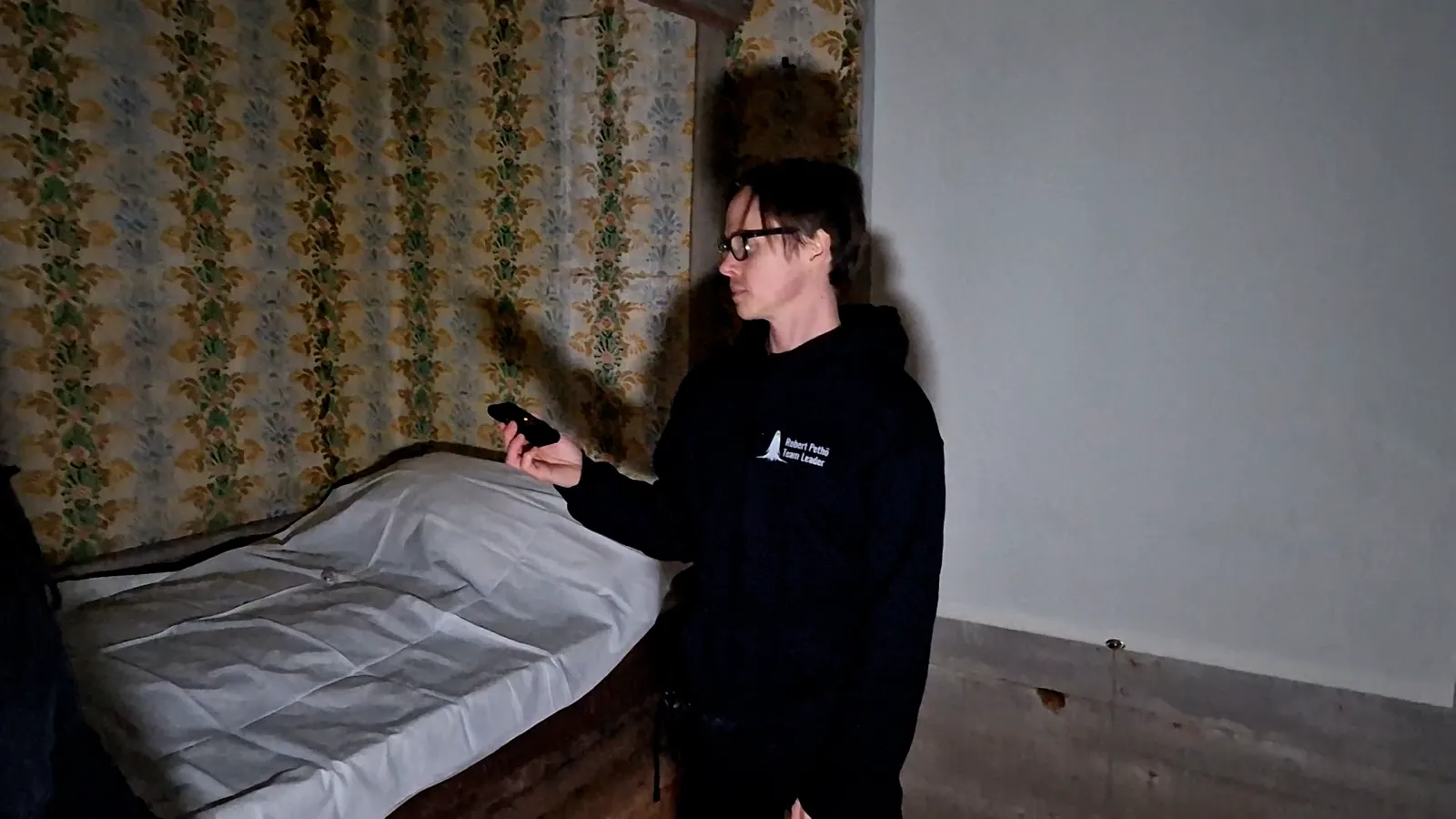
Joen’s personal favourite is the prison museum in Gävle, housed in the old county cell prison from 1847. Despite the history, he found it almost surprisingly pleasant to be there: large, open, with long sightlines and a great deal of history. He would happily go back.
It is a side of ghost hunting that rarely makes the edit: four people handed the keys to buildings they would otherwise never have entered, taking that seriously.
The dream locations
Robert has a clear holy grail: Österbybruk Manor. Lövstabruk appeals too, and he definitely wants to return to the old library in Skara.
Linnéa dreams of the Waldlust Hotel, largely for the landscape around the building, and of Bogesund Castle. Ylva names Österbybruk, Villa Oldofredi and Waldlust.
Joen has no specific dream location at all. An old castle or manor house abroad would obviously be a thrill, but for him it matters more that the group builds up the knowledge and the equipment until they could go anywhere and carry out a genuinely good investigation.
He lands on an image from The Hitchhiker’s Guide to the Galaxy: we may already have the answer, but we need to know what the question is before the whole thing makes sense.
”It’s okay not to know”
The closing is the most unanimous part of the whole interview, and it is aimed as much at the reader as at the genre.
”You don’t have to choose between two absolute camps where either everything is ghosts or everything is nonsense. It’s okay not to know.”
If they find a natural explanation, they don’t consider the investigation a failure. They have learned something. And if they find no explanation, that doesn’t mean they have found a ghost — only that they have something they haven’t managed to explain yet.
GKGC is also about more than the hunt for phenomena. They get to visit and document buildings they would otherwise never have seen inside, tell the history of those buildings and pass on the accounts of people who lived and worked in them. They hope that in turn sparks interest in the places and the heritage around them.
”We don’t want to tell anyone what they have to believe. We want to show what we have seen, how we have reasoned and what explanations we have been able to find, and then people can make up their own minds.”
And then one last encouragement, which can close this article too:
Stay curious.
Explore more: Stockholm · Värmland · Gävleborg · Uppsala · Sweden · Haunted Castles
More stories
- The cough in the corridor: meeting Solør Ghost Hunting Crew
- Inside Sandträsk Sanatorium — 409 beds, and most patients never went home
- The ghost towns the world left behind
- The places in Sweden where time stood still
- They didn't believe in ghosts. Then they took the night shift
- The family moved into their dream farmhouse. It started with a smell
- The place in the forest the locals warn you about
- Buildings you never knew were haunted, one is probably in your town