Interview
The cough in the corridor: meeting Solør Ghost Hunting Crew
14 September 2026 · 12 min read
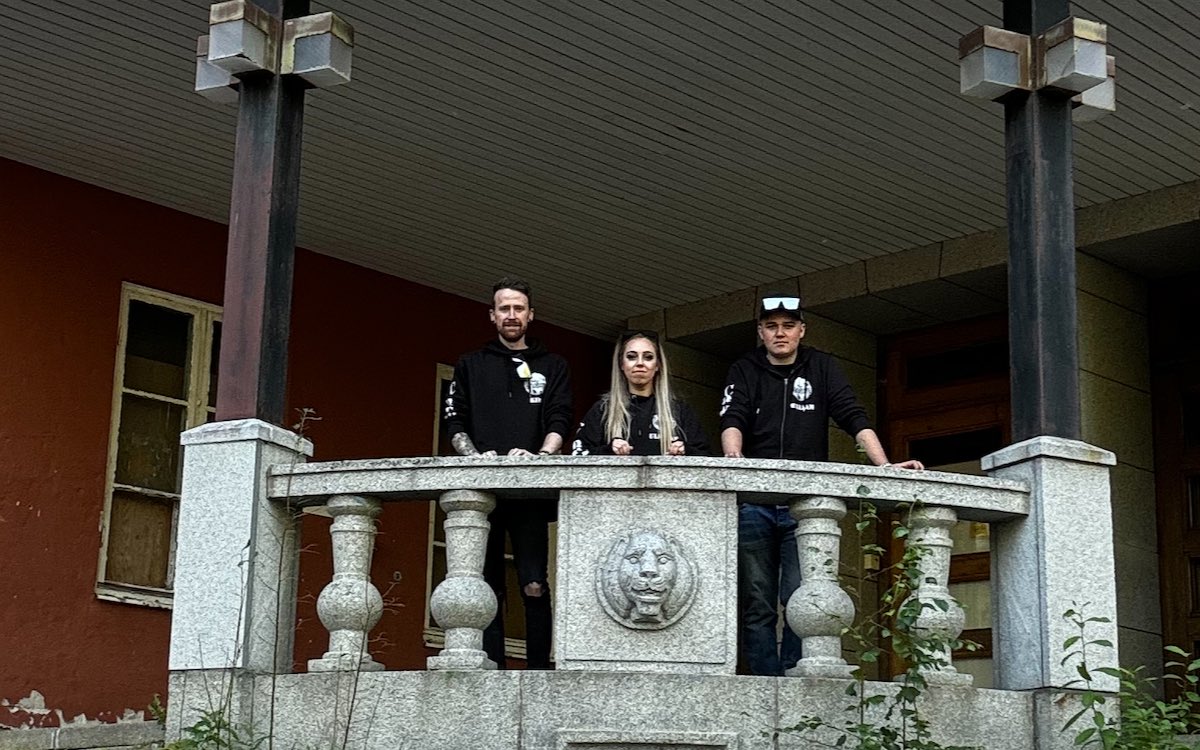
They joked that they would end up on TV one day. Two years later they were. But what stays with the Norwegian team isn’t the television cameras — it’s a child’s cough caught on video in an empty sanatorium in northern Sweden, and every EMF meter going off in the same second. Ulrikke and Kim on how they got here, the nights at Sandträsk, and why they would rather say they don’t know.
There are ghost hunters who look for ghosts. And then there are the ones who look for everything else — the things that happen in a building and refuse to be explained on the spot.
Solør Ghost Hunting Crew belongs to the second kind.
”For us, ghost hunting isn’t only about finding ghosts. What we actually find most interesting is everything we experience that we can’t explain right away.”
They are a Norwegian team with one shared interest and deliberately different personalities. They investigate old and historic places where people have reported strange experiences, and they document what happens — with technical equipment and with their own senses. Sounds, movement, changes in temperature, things that happen right in front of them.
But the first thing they bring up when asked to describe the team isn’t the equipment. It’s the way they hold together.
”We can be standing in the middle of the night in a dark, abandoned place, scared out of our wits one moment, and laughing together at something completely different the next.”
Two very different ways in
Ulrikke has always been interested in the paranormal. But her interest escalated after her stepfather died.
”He came back to me in a dream, and after that specific things started happening at home that I could connect to him.”
It went on for a while. Then it stopped — and the ending is what makes the story unusual. When he said goodbye to her in a dream, everything that had been happening came to an end.
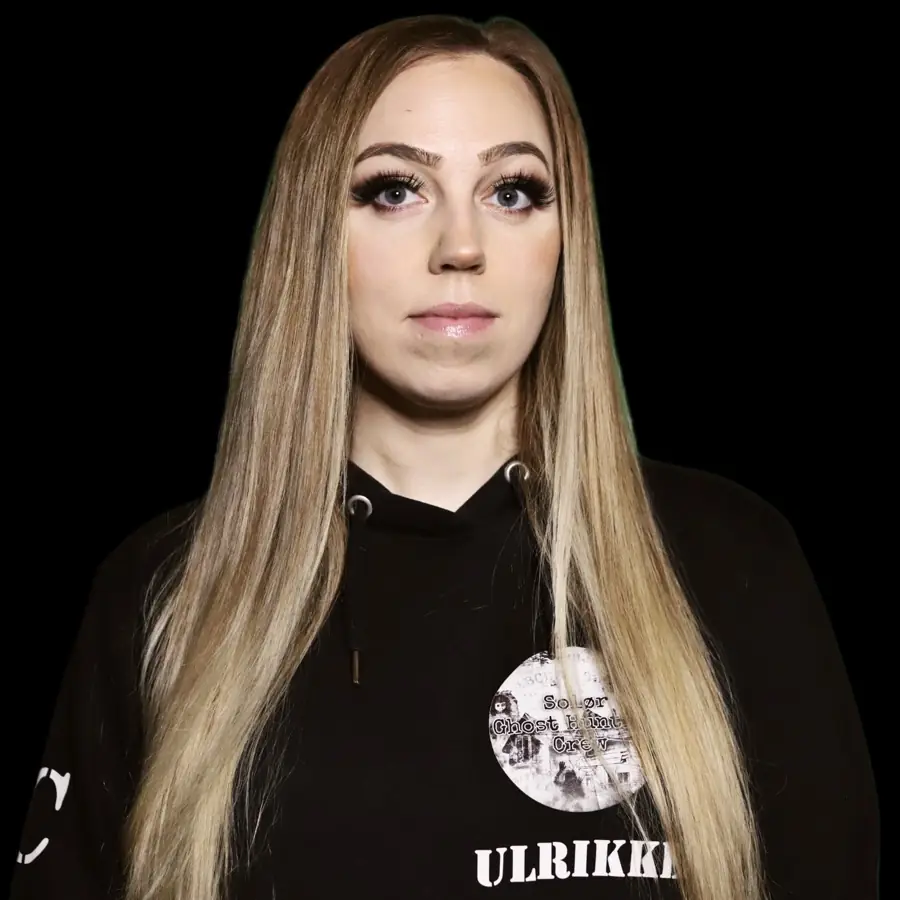
For Kim the way in looks completely different. He has been clairvoyant his whole life, so for him it was never something that started. The turning point came instead when he had a vision that his grandmother was going to die — and she died shortly afterwards.
After that he began taking his abilities seriously and wanted to understand them better. He later trained at Michael Winger’s school, which gave him more insight into what he experiences.
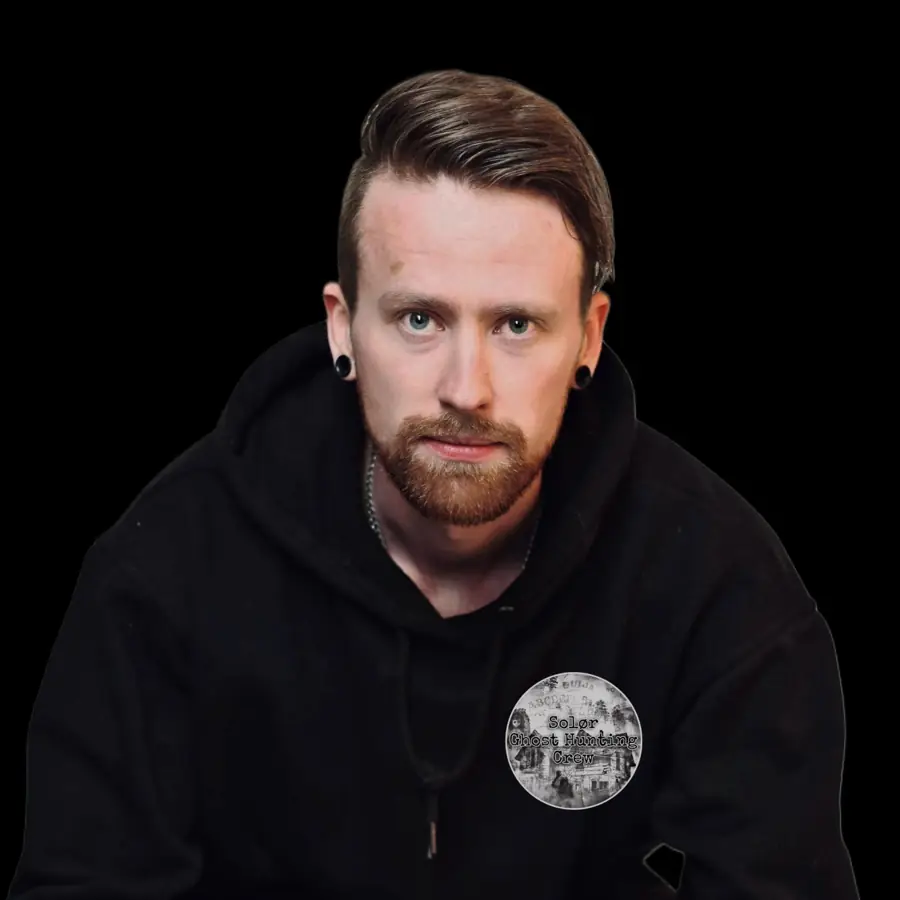
Two people, two entirely different entrances: one who got her experiences after a death, one who has carried them his whole life. It is also part of why they work as a team. They experience and interpret things differently.
The door handle that moved
Ulrikke’s first real encounter with something she couldn’t explain happened at her mother and stepfather’s house.
She watched the door handle press down when nobody was home. She heard footsteps above her when there was no one there.
What made it stranger still was her little brother. He was two or three years old at the time — today he is part of the team himself — and he told their mother and stepfather that there was a man in the hallway.
At the same time, Ulrikke was having the same nightmare every single night. In the end the family brought in a clairvoyant to cleanse the house.
It’s the next detail that stayed with her.
”She could tell me about what I had dreamt and experienced, without me having told her anything about the dream beforehand.”
She was young when it happened. That was the point where it stopped being something she found exciting and became something she had lived through.
The joke that turned into a TV show
The start was simple enough. They wanted to try to catch something paranormal on camera and see whether they could document what they had experienced and heard about.
Then something happened to the interest itself. The old stories, the people who had lived in these places and the history behind the buildings gradually became at least as big as the paranormal. After that came the interest in video and editing.
Today it is first and foremost a hobby — though of course it would be great to make a living from it one day.
When they started the team, they joked that they would end up on Viaplay one day. They laughed about it. It sounded completely unrealistic.
Roughly two years later they are in ”Alternative Norge”, premiering on Viaplay this autumn.
”It’s pretty surreal to think about when we look back at how the whole thing started.”
The car, the teddy bear and the dolls
The kit is the usual arsenal plus a few extras: EMF meters, a REM pod, dolls, a toy car and a teddy bear fitted with sensors, an S.P.7, a tape recorder and cameras.
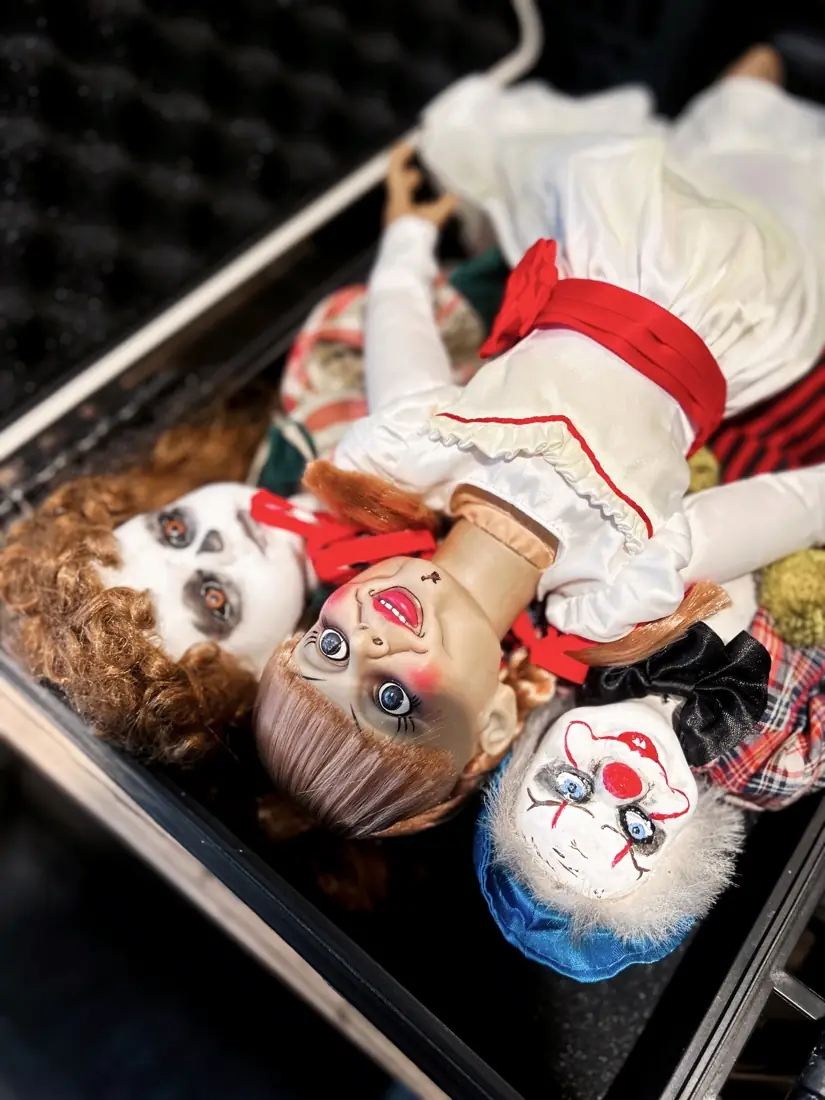
It’s always fun when the equipment reacts, they say, because then you start wondering what caused it. But the best moments aren’t the instruments.
”Maybe the most fun of all is when things happen with objects that aren’t the typical paranormal devices. For example if a ball suddenly starts rolling. That’s extra interesting, because it isn’t a device that’s supposed to give us a reading in the first place.”
There is a wish list, of course. At the top of it sits a Kinect.
What a night looks like
Before an investigation they spend time reading up on the history of the place. What happened there, who was there, which stories already exist.
Then they plan what they want to film, which equipment they want to try and where on the site it should stand. And then the practical part: charging and packing all of it.
Kim has his own preparation on top of that. He opens himself up more before an investigation, so that he becomes more receptive to the spiritual side and to whatever he might pick up on site.
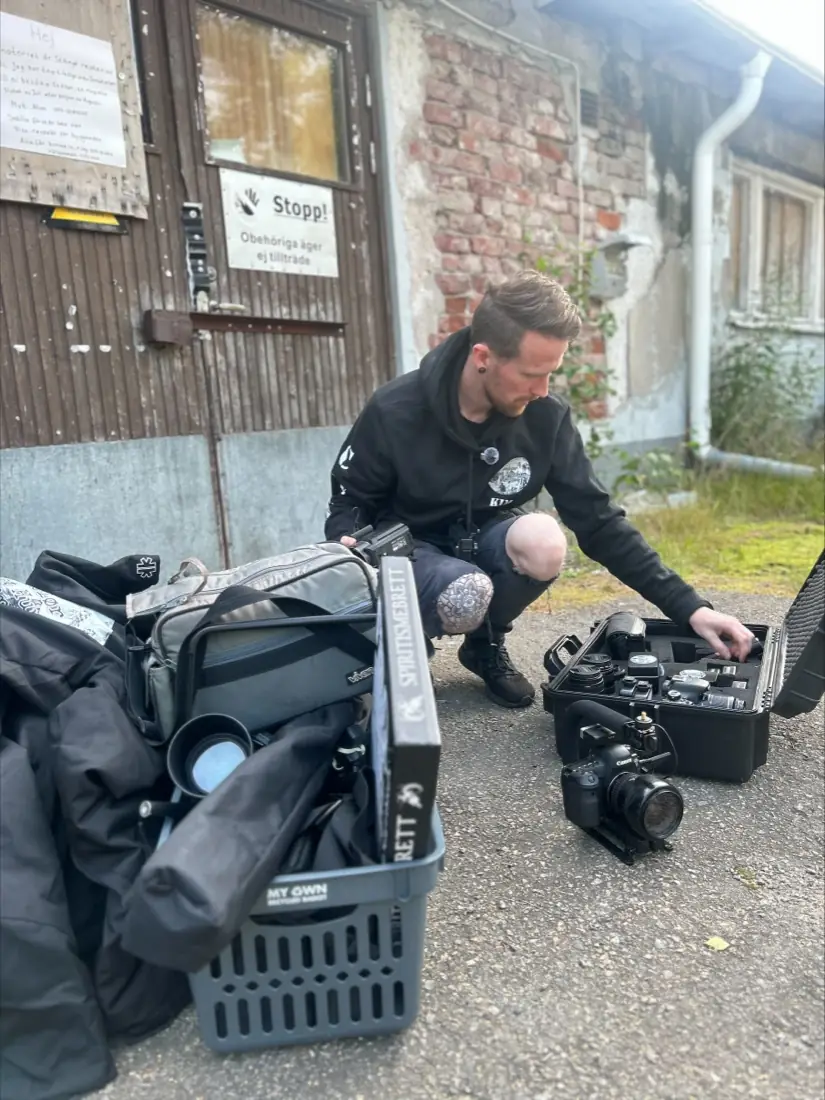
Once there, they start in daylight. They film clips for intros and social media, and use the light to get to know the building and look for hot spots they can return to after dark.
When darkness falls they either stay together as a group of four or split into two. They also leave cameras running in rooms where nobody is, to see whether anything happens when the place is empty. Now and then Kim walks the site alone to sense the energy.
The ending is as fixed as the preparation. They film the entire pack-down, clean up after themselves and thank the place before they leave. Kim cleanses the team afterwards, so that nobody brings any energies home.
The sanatorium that stayed with them
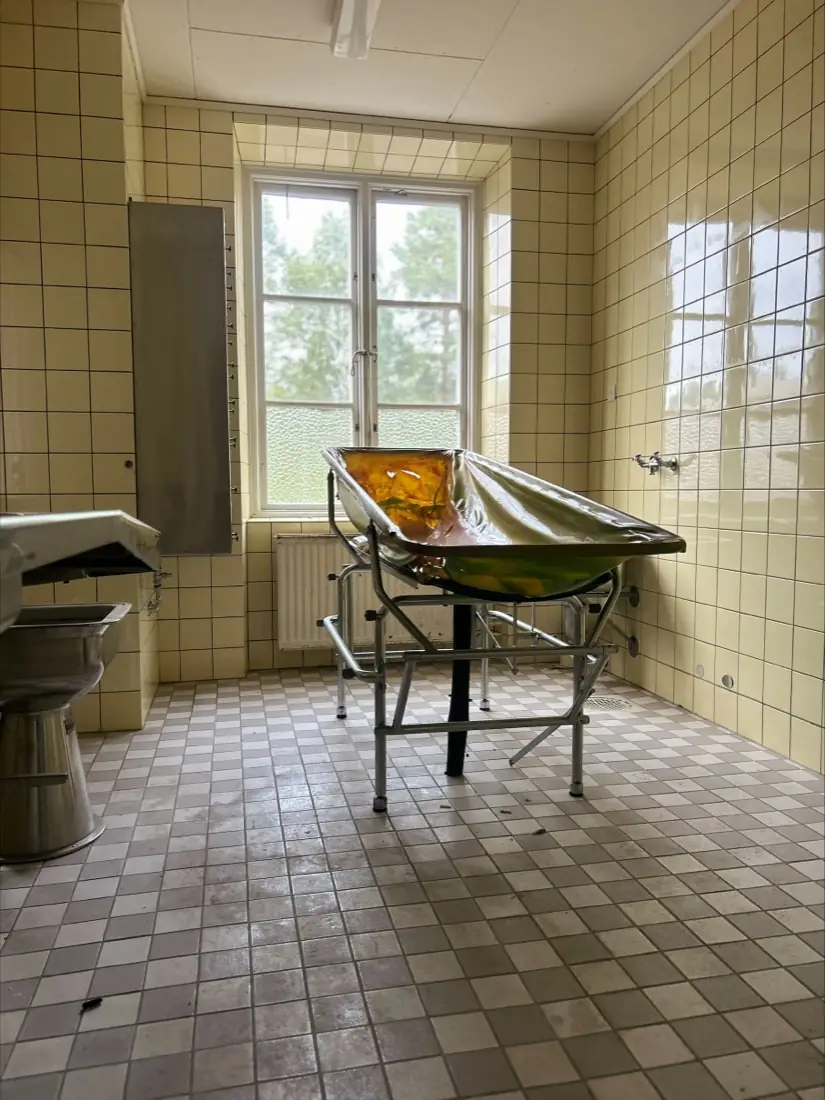
One place keeps returning in the conversation: Sandträsk sanatorium in Norrbotten, northern Sweden. One of the largest sanatoriums in the north of the country, built in 1913, empty today — and, according to the team, remarkably well preserved.
”You really get the feeling that the history is still sitting in the walls.”
It is also the place where they have experienced the most.
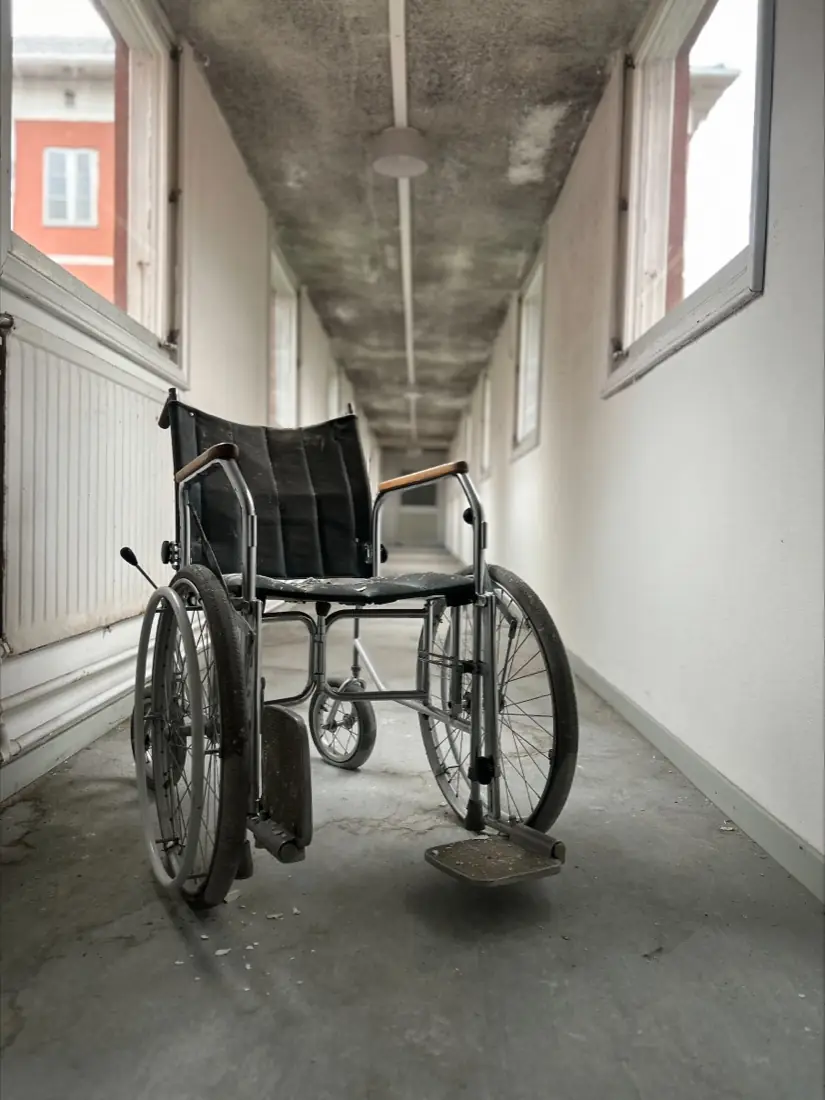
The event they bring up first happened during a Ouija board session: every EMF meter went off at the same time. Not one after another. Simultaneously.
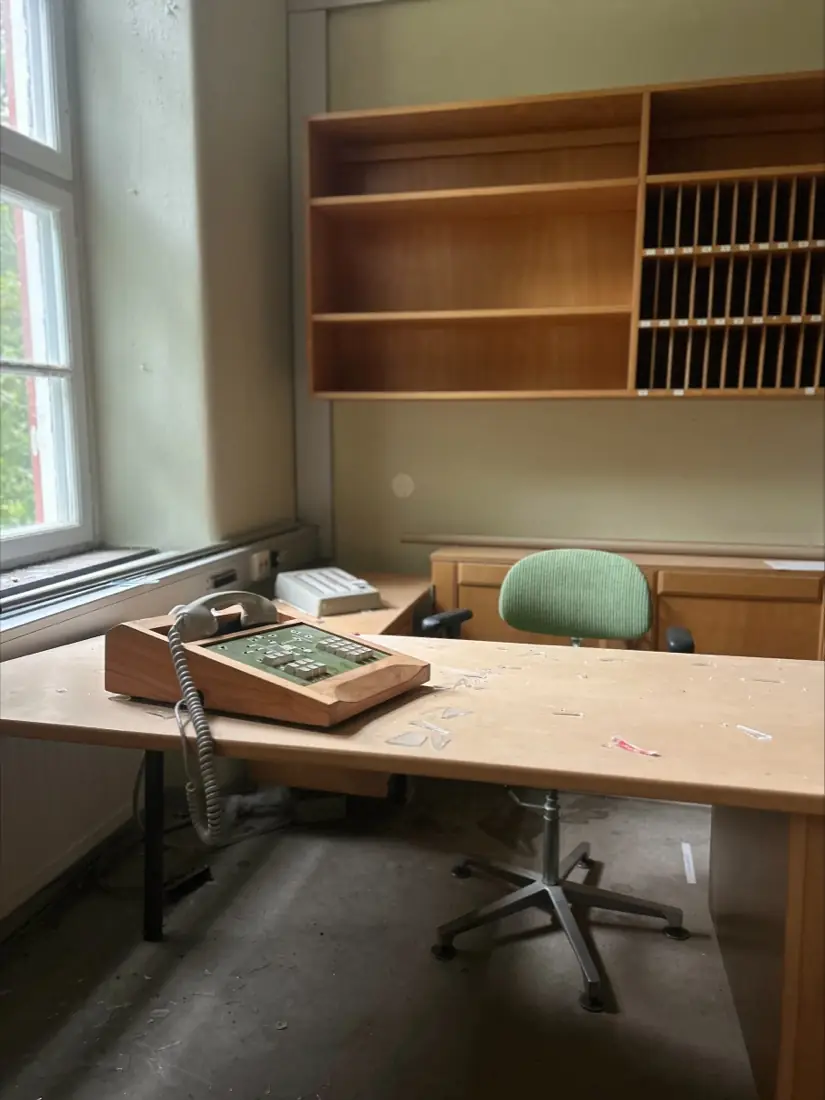
On another occasion both Ulrikke and William saw a very distinct figure.
”It’s a completely different kind of experience when you actually see something with your own eyes, and not just get a reading on a device.”
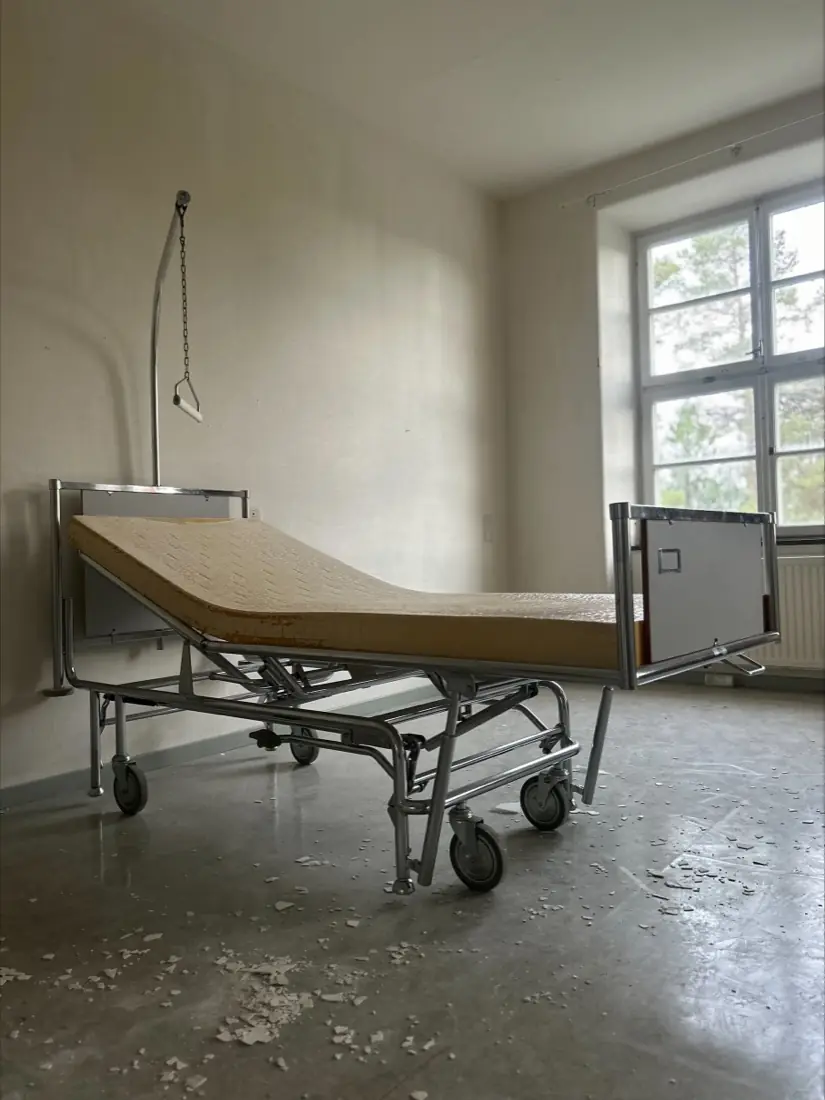
And then there is that one clip. The thing they still find strangest of all: a child’s cough, caught on video in the empty sanatorium.
There have also been times when Kim confirmed in advance, through his clairvoyance, that something was there — and several different devices then reacted at once in exactly that spot.
They would rather say ”we don’t know”
This is where the team becomes most firm. They look for a natural explanation first, every time.
Draughts. Technical faults. Sounds from the building itself. Animals. Other people. Anything that could have affected what they experienced or what registered on the equipment.
”We’re after real evidence and real experiences, not after making something up or faking things just for views.”
And then comes the sentence that really sums up the whole interview:
”We would rather be honest and say ’we don’t know what this is’ than claim that everything we experience is supernatural.”
There is still material they haven’t been able to explain. Several different voices on the spirit box, some of which came as answers to questions tied to the place they were in. A shadow on film they have found no natural explanation for.
They also deliberately avoid reading up on what others have experienced at a location beforehand. They feel it can colour their own experience and make it less genuine. That things have still happened in spots others had flagged as hot spots is interesting — but they keep their own observations separate from what they have been told.
”We don’t vandalise anything”
The question about misconceptions gets a long answer. That they are only out to scare people. That they believe everything they experience. That they fake things for views.
But the one that seems to irritate them most is a different one.
”People think we vandalise the old, abandoned places we visit. That is absolutely not what we want to be associated with. We respect the places we visit and we always clean up after ourselves.”
What they think happens next
They don’t believe the same thing, and they make no attempt to pretend otherwise.
Ulrikke believes there is life after death. She has heard a lot about reincarnation and likes the thought that you might be able to choose to stay behind for a while after dying, but that you eventually move on when you are ready.
Kim thinks partly differently. He argues that what remains and repeats itself in a building can sometimes be memories or energies, while the soul itself has already moved on. You might sense something from a person who was once there without necessarily making contact with that person at all.
Both are open to there being more than we can explain. Neither claims to have the answers.
England, Poland — and a manor house in Sweden
The dream is to go abroad. The big, well-known locations in England, Poland and the USA.
But there is another sanatorium that means a great deal to them too. After everything they have experienced they have developed a particular relationship with sanatoriums, and they would love to investigate more of them.
Closest in time is a Halloween event at Österbybruk Manor in Sweden. It will be a little different from an ordinary investigation, and they are looking forward to it.
”Open your mind a little”
To those who are entirely convinced that ghosts don’t exist, they feel no need to prove anything. Just an invitation.
”Obviously there’s a lot you can explain away, but we also believe there are experiences we can’t always explain that easily.”
They use the example of having a kind of guardian angel during an accident, or other situations where you felt that something or someone was watching over you. You don’t have to believe all of it, they say. But it is interesting to stay open to the possibility.
The last thing they want in the article isn’t about ghosts at all. It’s about the scene itself.
”We hope there can be a bit more cooperation between the different ghost hunting teams, instead of so much competition. We think we could all learn a lot from each other.”
And one final thing: people really shouldn’t be afraid to get in touch. Their own experiences, tips about places, or simple curiosity — all of it is welcome.
More stories
- Inside Sandträsk Sanatorium — 409 beds, and most patients never went home
- The ghost towns the world left behind
- The places in Sweden where time stood still
- They didn't believe in ghosts. Then they took the night shift
- The family moved into their dream farmhouse. It started with a smell
- The place in the forest the locals warn you about
- Buildings you never knew were haunted, one is probably in your town
- Ranked: The 10 scariest places you can actually visit