Folklore
Midsummer's Night: the most occult night of the year?
19 June 2026 · 5 min read
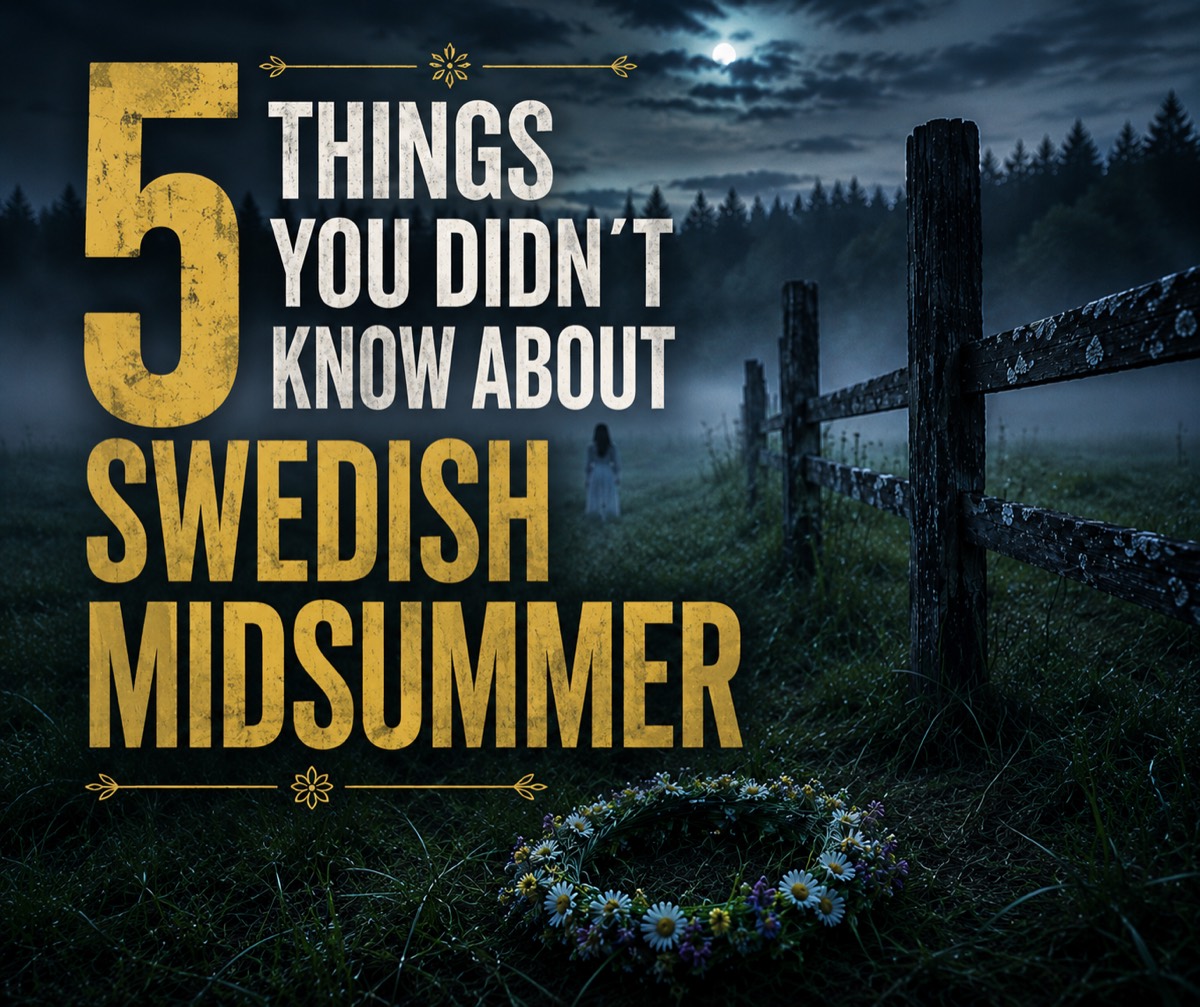
Long before pickled herring and dancing around the maypole, Midsummer's Night was the most dangerous night of the year. Elves in the mist, the Näcken at the brook and the dead among the living. This is the folklore behind Sweden's brightest night.
When the last notes of the Midsummer celebration fade and the mist begins to creep across the meadows, something else stirs to life.
At least, if our ancestors are to be believed.
Long before Midsummer became a holiday of pickled herring, strawberries and dancing around the maypole, the night was seen as one of the most magical and dangerous of the entire year. A night when the boundary between our world and the supernatural grew thinner than at any other time. In Swedish folklore this was the hour when elves danced in the mist, the Näcken played his seductive melodies by the streams, and the dead could show themselves to the living.
But what did people actually believe could happen on Midsummer's Night?
The night the future could be revealed
In older Swedish folklore, Midsummer's Night was considered perfect for divination. Many rituals were meant to reveal the future, especially who you would marry, or who would die before the next Midsummer.
The most famous tradition is still alive today.
Picking seven or nine kinds of flowers and placing them under your pillow was said to let you dream of your future love. But there is a detail that is often forgotten. The flowers had to be picked in complete silence. A single word could break the spell.
Far darker was the ritual known as the year walk (årsgång).
Whoever dared to walk counterclockwise around the church at midnight could, according to legend, see visions of the year to come. Some accounts describe how the year walker saw wedding processions, funerals, and sometimes their own death. But the path was full of dangers. Evil beings, church grims and other supernatural forces tried to stop anyone who sought knowledge of the future.
The elves danced in the mist
If you have ever seen thin veils of mist drifting over a summer meadow, you have witnessed something once called elf smoke (älvrök).
In folklore this was a sign that the elves were out dancing.
Anyone who happened to walk through their dancing ground could be struck by illness, dizziness or confusion. In some tales people were lured away from paths and roads, never to return. That is why many avoided going out alone on Midsummer's Night.
The hunt for the impossible flower
One of the most fascinating legends concerns the flower of the fern.
The only problem is that ferns do not bloom.
Even so, people believed for generations that a single flower opened at exactly midnight on Midsummer's Night. Whoever managed to find it would gain supernatural powers. Some stories speak of invisibility. Others of the ability to find hidden treasure or understand secrets otherwise concealed from humankind.
But the flower was guarded.
In the legends, terrifying visions appear around anyone who seeks it. Snakes, wild animals and dark beings try to frighten off the bold treasure hunter. Only someone who can withstand their own fear can reach the flower.
The Näcken played in the dark
When darkness fell over lakes and rivers, another figure grew especially active.
The Näcken, the Nordic water spirit, was said to play his fiddle by rapids and brooks. The music was so beautiful it could make people follow without a second thought.
Many of these stories end badly.
Anyone lured too close to the water risked vanishing or drowning. Yet there were also legends that the Näcken could teach supernatural music to those who dared to meet him and pay the right price.
When nature turned magical
Midsummer was not only a time for spirits and creatures.
People also believed that nature itself was filled with power.
Herbs gathered on this night were thought to have stronger healing properties. Springs could grant health and protection. The Midsummer dew was collected for healing, and many rolled in the grass to take part in its power.
It says something about how people once saw the world.
Nature, magic and everyday life were not separate things. Everything was connected.
Does the magic of Midsummer's Night still live on?
Today most people regard these tales as fascinating folklore.
And yet there is something about Midsummer's Night.
Maybe it is the bright nights. Maybe it is the mist rolling in over the meadows. Or maybe it is simply the old stories still whispering between the trees.
But the next time you walk home through the summer night after the Midsummer celebration, it may be worth listening a little more closely.
If you hear fiddle music from a dark brook, or see strange figures dancing in the mist, you may have brushed against the very thing our ancestors feared most.
The night when the world was not quite as it should be.
More stories
- The cough in the corridor: meeting Solør Ghost Hunting Crew
- Inside Sandträsk Sanatorium — 409 beds, and most patients never went home
- The ghost towns the world left behind
- The places in Sweden where time stood still
- They didn't believe in ghosts. Then they took the night shift
- The family moved into their dream farmhouse. It started with a smell
- The place in the forest the locals warn you about
- Buildings you never knew were haunted, one is probably in your town